by John Glynn | Feb 22, 2017 | Classic Porsche Blog, Project Cars
One of my favourite Porsche projects of the last few years has been working with my friend Jonny Hart on the brand development of his company, Classic Retrofit. Jonny and I became online friends soon after he joined our 1974-1989 Porsche 911 forum at impactbumpers.com and it has been fun to follow his electronics magic on parts for these classic 911s, including the all new Porsche 911 air con system.
The peak of achievement to date is Jonny’s electric air con kit for classic Porsche 911s. Branded ‘Electrocooler’, the full kit is about to be unleashed on the classic Porsche community in its first public showing at the LA Lit Show on March 4.
I shared some pics on Classic Retrofit’s social media pages last week and they went totally ballistic: a most rewarding return for all of Jonny’s hard work. I have just sent more details out and am sure that many of my Ferdinand friends will also be interested in knowing more, so I share them below.
Email Jonny at info@classicretrofit.com to discuss any of his products.
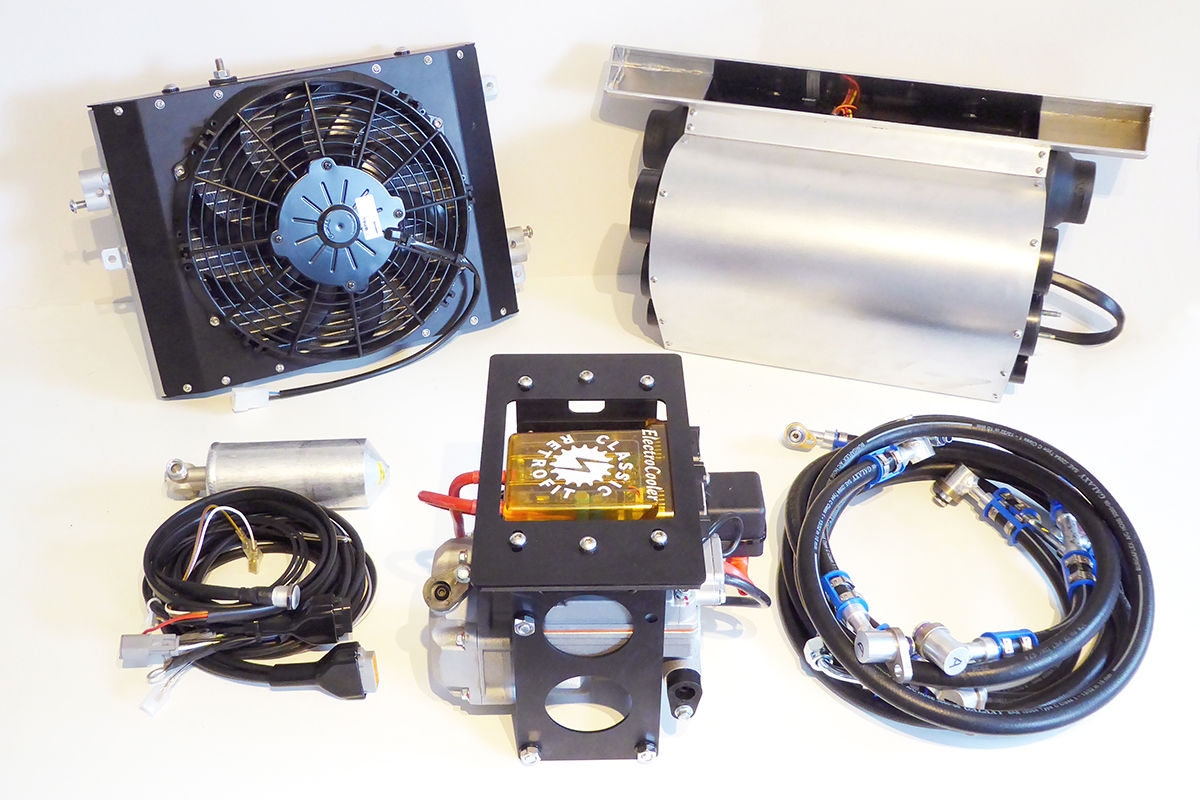
Classic Porsche 911 Electric Air Con: A/C Technical Layout
The compressor module (front centre in the picture) goes in the smuggler’s box on a LHD 911. On a RHD car, the compressor is mounted adjacent to the battery and fits with no modifications to battery or spare wheel arrangements.
The condenser goes under the front wing/fender, in place of the oversized windscreen washer reservoir on an impact-bumper car. The blower unit (top right) contains a modern fan and evaporator. All original non A/C vents now blow A/C air.
The occupants can also enjoy A/C air out of any vent in the car, including warm A/C air for rapid windscreen defogging. Our blower assembly brings recirculation capability to the 911s ventilation system and assists heated air flow for hot air without the need for footwell blowers.
Maintaining the standards of classic Porsche design, the original cabin slider ventilation controls are retained, for maximum discretion. A single pushbutton with indication is the only visible clue that Electrocooler is fitted.
Electrocooler Weight Savings and Performance Benefits
As shown in our photo, the complete kit weighs a shade over 16 kilograms (35 lbs). Combining the fitment of a smaller washer bottle and accounting for removal of the original fresh air blower, installing Classic Retrofit’s Electrocooler kit to a 911 originally supplied without factory air conditioning adds less than 7 kilograms (15 lbs) to overall weight.
For a car originally equipped with factory air conditioning, converting to the Classic Retrofit Electrocooler system results in an overall weight saving of circa 18 kilograms (40 lbs).
There is the added handling benefit of weight loss at the rear of the car by removing the substantial original air-con compressor from its elevated position in the engine bay, not to mention the increased fuel efficiency and engine power, once the crankshaft load inflicted by the archaic belt-driven compressor is removed.

by John Glynn | Nov 13, 2016 | Classic Porsche Blog, Modified Porsche Hot Rods
I’ve been a bit of an air-cooled 911 accessories shopping guide of late! My friends at KW Suspension in Germany have just released a new suspension kit (and reminded me of an older one) for impact-bumper Porsche 911 models and I promised I would share.

The first kit is an adjustable damper upgrade for G-model 911s which works with the torsion bar system. Part of the KW Suspension “Classic Range”, this KW Variant 3 setup is a complete car set of compression and rebound adjustable shock absorbers. The kit does not require a conversion to coilovers, but instead retains the car’s torsion bar system. The mild steel damper bodies are galvanised for longer life.

KW Suspension Coilovers for Torsion Bar Delete
Further up the price scale is the Clubsport 2-way coilover kit, which allows torsion bar deletion. KW recommends this lighter system with aluminium damper bodies primarily for motorsport use, but check your competition regs carefully before committing to the spend. Supplied with adjustable aluminium monoball front top mounts, the upside-down front dampers are adjustable for both rebound and compression.
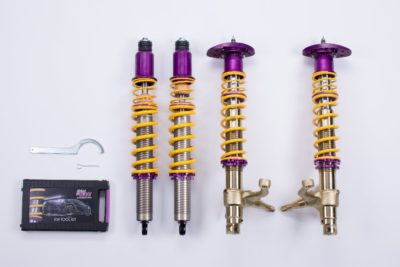
Rebound is adjusted at the piston rod end and provides sixteen clicks of adjustment. Compression adjustment is carried out via a 12-position adjuster on the upper damper housing. “Increased rebound forces ensure tighter handling and a significantly reduced rolling of the body,” say KW. “At very high speeds, the steering precision is improved at the driving dynamic limit, while on the uneven and wavy road surfaces, a lower rebound stage is advantageous.”

Both kits are TUV approved for use on the roads. The Variant 3 kit costs £2062 plus VAT in the UK and is available from KW dealers. No price on the 2-ways: I expect you might need to be sitting down for that one 😀
by John Glynn | Jul 16, 2016 | Porsche Cayenne, Project Cars
Shakespeare once wrote that “the course of true love never did run smooth”. The timeless wisdom of this observation was proven yet again today, when I tackled a Porsche Cayenne rear spring replacement on my 2004 V8 Cayenne S: a.k.a. The Big Pig.
I took the Cayenne for MOT (annual safety inspection) last week and it was en route to passing with flying colours, until we got to the back end, where one spring had a cracked coil. Instant fail. I priced up genuine Porsche springs at £200 each plus the VAT, or Kilen springs made in Sweden from an eBay seller (the worryingly named “Octane Motorstore”) at £65 delivered for a pair. I wanted to change the pair of rear springs, so £400 versus £65 was a no brainer.

The Cayenne has now clocked up 159,000 miles, with 42k of those in my ownership. Despite all the grief that this high maintenance German car has caused compared to my six previous trouble-free Subaru Legacy station wagons, I’m still quite keen on it, so I do like to keep it working properly and do as much of the work as I can myself.
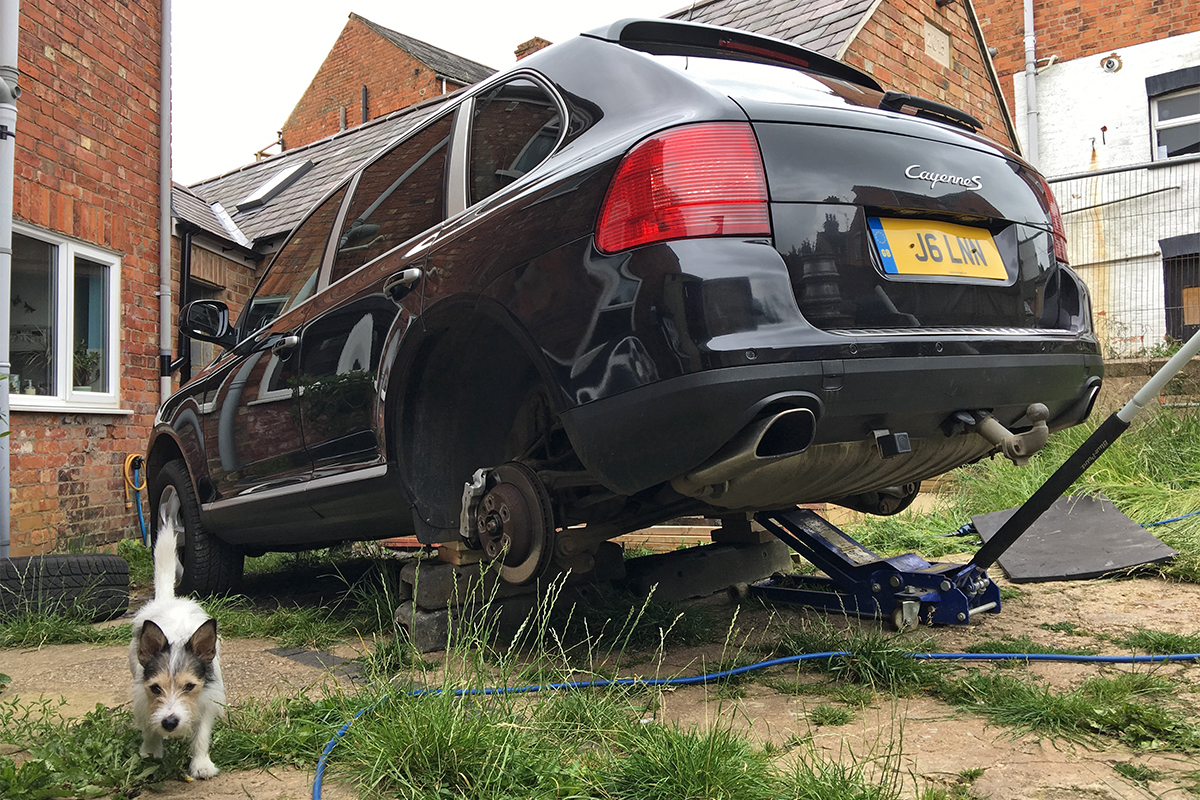
Rear spring repacement is a pretty easy job on these: the hardest part is finding the time and a dry day to do the work, and jacking the Cayenne up to get underneath it. Working on this thing on the ground is a pain in the arse as it is so heavy. I go with a belt and braces approach to supporting the car as I am always working on my own. You are not coming out in one normal-size piece if it slips off a jackstand while you’re underneath it, so I use substantial (heavy) underpinnings.

Eventually I got it up in the air, well supported with the rear wheels off and sized up the job. The rear suspension looks complicated, but it’s pretty simple: Pelican Parts has a great how-to on removing the rear suspension. The spring and damper assembly is a complete strut just like the front, so, once the anti-roll bar droplink is out of the way and the bottom shock nut is off, you just undo the four bolts holding the top mount to the chassis and drop the whole thing out. Then it’s easy enough to get spring compressors on the strut and break it all down into component pieces.
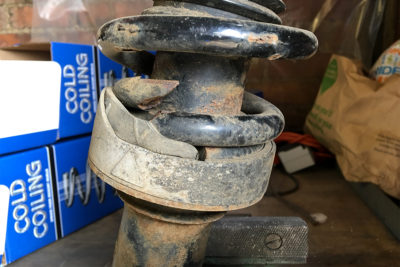
Everything went smoothly enough. Undoing the strut top bolts was a mother of a job but, with a mishmash of extensions and breaker bars, they all eventually came undone. Taking it apart was easy (another win for air tools), but of course my doubts about the eBay springs were well founded: completely the wrong size and shape. They’ve got to go back and the dubious seller is being pretty tight about paying for the return, even though they sent the wrong parts. I had a strong feeling that it was all too good to be true.

There are very few affordable options for uprated damper & spring kits on Cayennes, so to give myself more time to research what is out there and get the car back on the road in the meantime, I ordered a low mileage used rear strut assembly from a breaker friend of mine and will put that on to get the Cayenne through the MOT.
While I have the thing up in the air, I pulled the rear bumper, relocated the LPG filling point on to the chassis, jet washed everything and sprayed it all with some rustproofing wax.
by John Glynn | Jun 14, 2016 | Porsche Cayenne, Project Cars
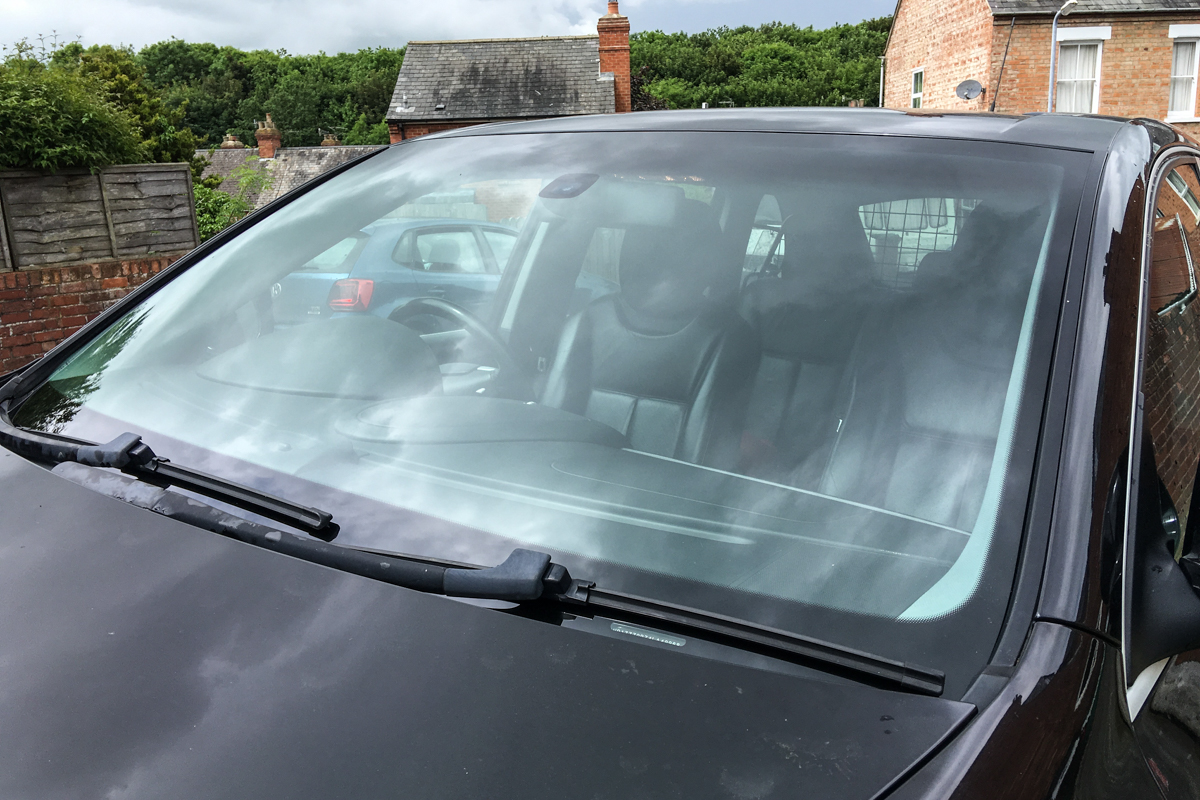
After 158,000 miles of chips and scratches and a recent heavy impact with a hefty crow, today it was time for my Porsche Cayenne to enjoy a windscreen replacement. My insurers have an agreement with Autoglass, so I set up an appointment and waited for the fitter to arrive.
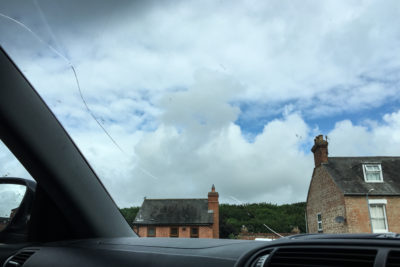
The crow incident had cracked the screen from top to bottom, so it needed replacing. Having used some of the big windscreen removal companies a few times, and seen how their rush job fitters can make a bit of a hash of things, in the past I have bought the glass and bonding adhesive to do my own cars. However, this was a big bit of glass so not an easy one-man job, and the top tint and auto wiper sensor made the screen pretty expensive. Better to let the professionals do it, with a little bit of help to lift the glass in.
The Autoglass guy came early and took a bit of time deciding where best to carry out the work. Rain was on the way and he needed to line his van up perpendicular to the Porsche, to be able to use the side-mounted awning if needed. There was no space on the street to do this, so he decided to park the car just inside the gates on my soon-to-be-driveway, with the nose sticking out of the gates. We took a bit of time to get the Cayenne level and it all worked out OK.
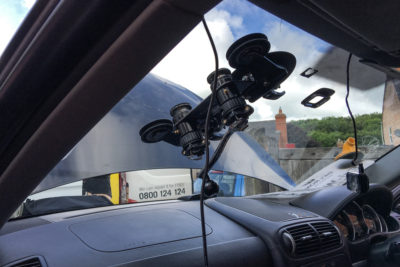
Ezi-Wire patented windscreen seal cutting tool
My last windscreen change was done by a local guy who cut the screen out of my Spec B Subaru Legacy estate using hand-held knife blades. He had to strip half the interior trim to do the job properly. The Cayenne’s windscreen replacement was made easier by the use of an ‘Ezi-Wire’ device mounted to the inside of the screen (above), which gently pulled a high tensile steel cable through the windscreen adhesive and made a very tidy job of it. Apparently the Ezi-Wire is an Autoglass/Carglass/Belron patented tool, so no wonder I hadn’t seen it before.
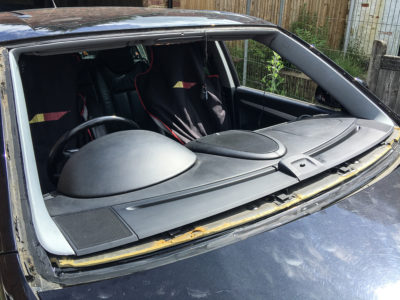
The Ezi-Wire uses a pair of winding spools, controlled by a hand ratchet. The twin spools cut from opposite directions and allow controlled “slip cutting”, which enables the cable to slice through the bonding seal rather than the seal having to be cut with a hard-to-control hand knife, so the work is much less risky. The Autoglass technician had a van full of tools, but reckoned the Ezi-Wire helped him do most jobs right first time, with no damage to the vehicle.
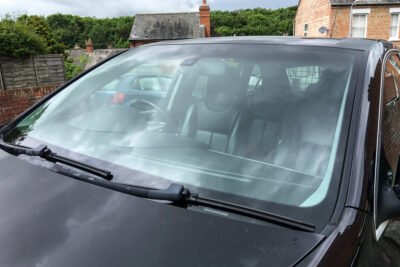
From start to finish, the whole thing took two hours including two cups of tea and plenty of chat. I am delighted with the finished product: you can’t beat a new windscreen to lift the driving experience. Also delighted that I had Dick’s thirty years of glass fitting experience here to do the work. I did find a small bit of surface rust in the top right corner of the Cayenne’s windscreen aperture, but I cleaned it up and ground the rust out before adding a bit of Kurust treatment. It was then finished with an anti-rust primer before the windscreen was fitted.

by John Glynn | Apr 23, 2016 | Porsche Cayenne, Porsche News
Porsche is amongst a group of manufacturers who have issued voluntary recalls for a total of 630,000 vehicles across Germany to address irregularities with diesel emissions systems, after being listed as real-world emissions offenders by the German goverment.
Porsche sells a variety of diesel engines in the Macan and Cayenne SUVs: two model lines which now make up 70% of all Porsche sales. The Cayenne Diesel’s 3-litre V6 Turbodiesel produces 262 hp at 4,000 rpm and the Cayenne S Diesel’s 4.2-litre V8 Turbodiesel produces 385 hp at 3,750 rpm. Both are EU6 compliant. The TDI option in the Porsche Macan S Diesel is the 3-litre V6 making 254 hp at 4,250 rpm and a collosal 580Nm of torque from 1,500-2,500 rpm. This Porsche Macan diesel engine is now subject to emissions recall in Germany.
Cayenne Diesel pulled from US sale by Porsche Cars North America
No mention has been made of the Cayenne’s V6 TDI, which achieves the same excellent torque output, but which Porsche Cars North America voluntarily removed from sale at the end of last year, after it received a notice of violation from the United States Environmental Protection Agency (EPA) regarding the 2015 Porsche Cayenne Diesel. Audi declined to follow Porsche’s example and left all of its 3.0 V6 TDI models on sale.
Figures shared by Autocar magazine says that the recall includes 32,000 Macan diesels. As in the case of the VW diesel issue, early murmurs on Macan forums suggest that a number of owners will not have their cars corrected. This is despite a series of tests carried out by ADAC in Germany which show that the Porsche Macan S Diesel emits over four times more NOx in the “real-world” WLTC emissions test versus the the NEDC test used by EU officials.
Australia sues over Porsche 3-litre diesel emissions
Since the dieselgate emissions scandal broke, Volkwagen has repeatedly claimed that its 3-litre V6 TDI engines are clean and compliant, despite the engine’s withdrawal from sale in the US. Despite these assertions, Australian lawyers representing more than 13,000 VW owners in a class action suit covering almost 100,000 VW diesel cars sold in Australia from 2009 to 2016 added the 3.0 V6 TDI to its lawsuit at the end of 2015.
“Volkswagen has made denials that have subsequently proven to be untrue every step of the way,” said class actions lawyer, Jason Geisker. “It denied the initial test results that uncovered this global scandal and also denied that its 3.0-litre vehicles sold in the USA were affected, before later admitting that these engines did have defeat devices fitted.”
NOx Emissions causing 50,000 premature UK deaths per annum
The latest emissions recalls in Germany are based around how emissions outputs are recirculated ‘post-treatment’, with some manufacturer systems venting them to air above a certain ambient temperature, rather than pumping them back into the engine. Manufacturers including Alfa Romeo, Chevrolet, Fiat, Ford, Range Rover, Mercedes-Benz and Renault are also implicated. So far only Audi and Opel/GM have stated that they will apply the updates on every affected car in Europe.
The official line is that no single authority is forcing Porsche and these other manufacturers to bring their most heavily polluting diesels back and sort out their emissions systems, but it is impossible to believe that manufacturers would spend money to do this voluntarily. Given that WHO research data now suggests that NOx emissions cause as many as 50,000 premature deaths per year in the UK alone, there is also a question mark over the actions of VW, Porsche and other marque owners who choose not to have the software corrections applied to reduce the NOx emissions of their vehicles.
Owners opting not to apply emissions-reducing software fixes
Owners who choose not to apply software that reduces poisonous gas emissions from their vehicle tailpipes are breathing the same air as everyone else, but justify overlooking these excessive emissions by claiming that the software updates would make their cars less powerful and damage engine internals. The fact that the recall has been left as voluntary by the German authorities means that the manufacturers can sidestep their legal responsibilties to reducing air pollutants, while also claiming that owners have not been disadvantaged and do not deserve compensation, as they like how their cars work. All that money spent on political lobbyists by car manufacturers across the EU this continues to pay off, but meanwhile, children are forced to breathe highly polluted air.
You may regard this as an overdramatisation, but a 2010 exercise to monitor London’s air pollution illustrated the scale of the emissions problem most effectively, when the UK capital used up its annual allowance for NO2 emissions in the first three weeks of measuring. A 52-week allowance used up in three weeks, and diesel engines that are now an average of nine times more polluting against permitted standards means there is no excuse for owners of affected vehicles to sidestep the emissions fixes.
We are still in the early days of this emissions scandal. There can be no doubt that diesel engines and car manufacturing as a whole will face a lot more scrutiny in the months ahead – unless the industry hires even more lobbyists.


